Dried vegetables from India
Price as per order
Product Description
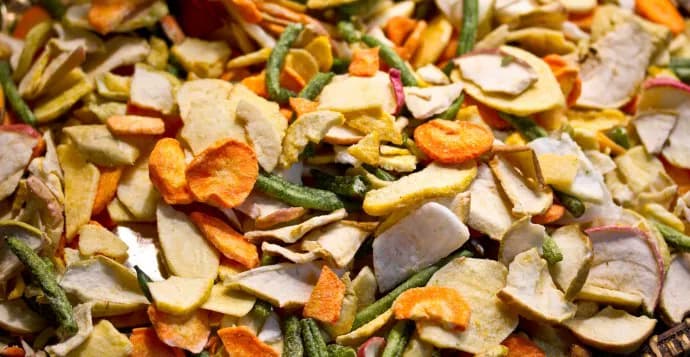
There are many types of dried and dehydrated vegetables, such as potatoes, beans, snap beans, lima beans, leafy vegetables, carrots, corn, and onions.
Carrots and mushrooms. Due to their higher density, dried vegetables contain more calories per ounce than fresh vegetables. For example, 1 ounce of fresh carrots contains 11 calories. For comparison, 1 ounce of dehydrated carrots, which is equivalent to just over 1/3 cup, contains 96 calories.
Calorie content
Dried vegetables retain 100% of the calorie content of fresh vegetables while only occupying half the space. Current dehydration technologies can remove virtually all moisture content in vegetables, leaving only 2 percent to 3 percent in the finished product. Removing moisture increases the shelf life of vegetables.
Heat and nutrients
The process of dehydrating vegetables requires warming up. Although the temperature is kept at a fairly low level, some heat-sensitive vitamins, primarily vitamin C, are lost. Vitamin A is fairly well preserved, despite the effects of heat, as long as the temperature is kept and controlled. Conventional culinary processes can also lead to the loss or destruction of these two vitamins. Water-soluble vitamins, such as B vitamins, can be lost during the rehydration process of dried vegetables, but they can also be saved if you use a liquid extract during cooking.
Food Fiber Content
Dehydration retains the full fiber content of vegetables, ensuring that they remain high in fiber and food choices. Dietary fiber helps reduce the effects of constipation.
Textures and Consumption